
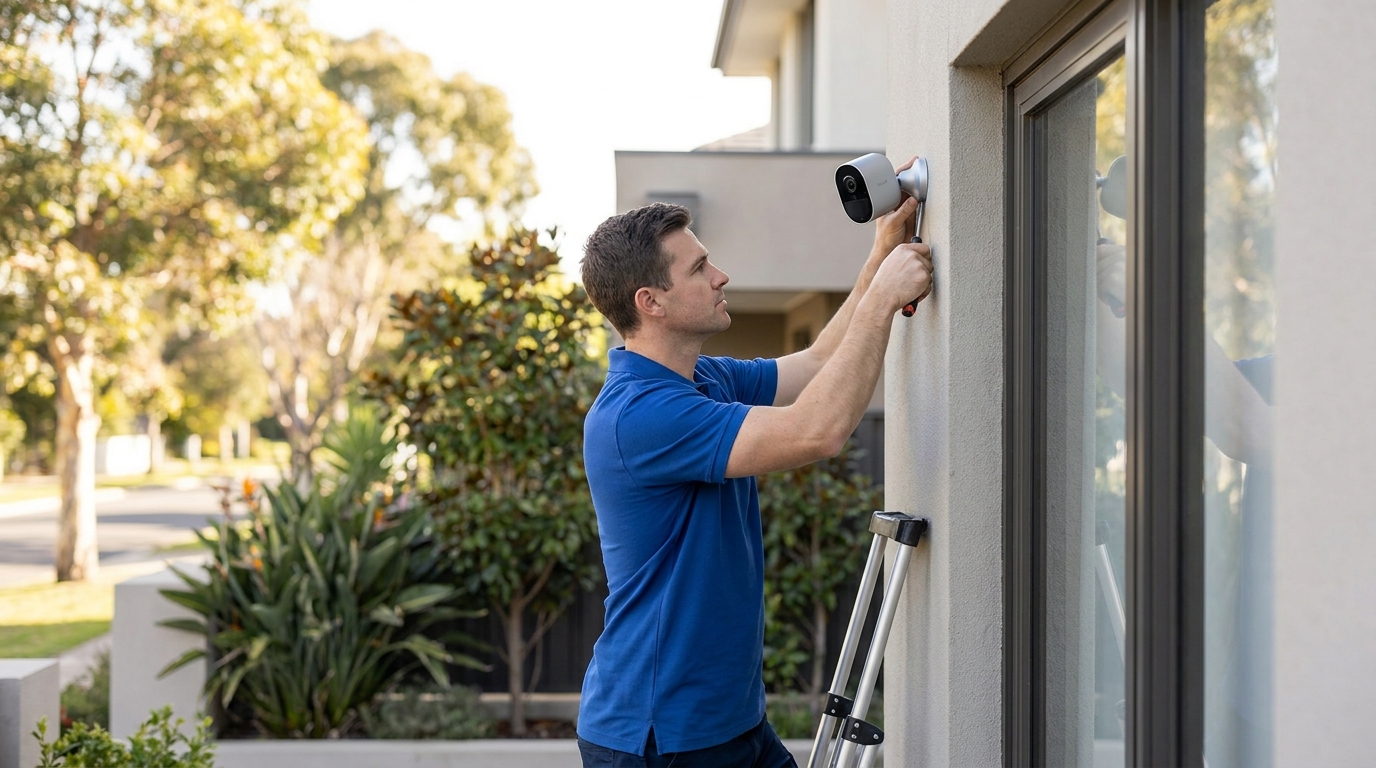

Thinking about installing security cameras in Port Macquarie? Learn about local crime stats, NSW surveillance laws, and how to protect your property today.
Whether you own a bustling cafe near the Hastings River or a quiet family home in Lighthouse Beach, protecting your property is a top priority. With regional property crime rates fluctuating across the Mid North Coast, installing reliable security cameras in Port Macquarie is one of the smartest investments you can make for your property's defence. After all, CCTV is like an insurance policy - you never know when you might need it, but you'll be thankful you did if anything unfortunately did occur.
Navigating the world of surveillance can be overwhelming, especially with the sheer volume of products on the market. From understanding state privacy legislation to selecting hardware that can survive the corrosive salt air of the Pacific Ocean, there is a lot to consider. This comprehensive guide breaks down exactly what you need to know to secure your local home or business effectively.
Why Port Macquarie Properties Need Security Cameras
Port Macquarie is celebrated for its laid-back coastal lifestyle, stunning beaches, and tight-knit community. However, like any growing regional hub, it is not entirely immune to the property crime trends that affect broader Australia. As the population in the Hastings region continues to expand, so does the unfortunate reality of opportunistic theft, trespassing, and vandalism.
When we examine the latest crime statistics by LGA from BOCSAR, it becomes evident that regional NSW areas often experience fluctuating rates of break-and-enters that rival some metropolitan suburbs. For homeowners in expanding estates like Sovereign Hills, or business operators in the local industrial zones, this data highlights a clear need for proactive security measures rather than reactive ones.
Local authorities are highly proactive, and the Port Macquarie Hastings Council places a strong emphasis on community safety and resilience through various urban planning initiatives. However, police and council security patrols cannot be everywhere at once. A highly visible, professionally installed surveillance system acts as a powerful deterrent. Thieves typically look for soft targets; the presence of commercial-grade lenses on your eaves or storefront is usually enough to make them move on, providing you with undeniable peace of mind whether you are asleep upstairs or away on holiday.
Understanding NSW Surveillance Laws for Your Home or Business
Installing a surveillance system isn't just about mounting hardware and running cables; it requires a strict adherence to state legislation. Before you switch on your new system, you must understand the legal framework governing surveillance to ensure you don't inadvertently breach someone's privacy.
The Surveillance Devices Act 2007 sets out very clear guidelines on how and where you can operate recording equipment on private property in New South Wales. One of the most common compliance issues we see involves audio recording. Under NSW law, recording a private conversation without the explicit consent of all parties involved is a serious offence. Because of this, it is standard practice to have audio recording disabled on systems that capture areas where people have a reasonable expectation of privacy, or where public conversations might be incidentally recorded.
Video surveillance also comes with its own set of rules, particularly concerning your neighbours. If you live in a densely populated area near the CBD or share close fence lines in Lake Cathie, you must be mindful of your camera angles. While it is perfectly legal to monitor your own driveway, front porch, or backyard, positioning a lens so it peers directly over a fence into a neighbour's bedroom window or captures excessive amounts of a public footpath can lead to severe privacy disputes. Best practice dictates masking out sensitive areas in your system's software and ensuring your cameras are strictly focused on your own property boundaries.
The NSW Police CCTV Register: Helping the Local Community
Your private surveillance system can serve a dual purpose: protecting your own assets and acting as a digital neighbourhood watch for the wider Hastings community. One of the most powerful ways to contribute to local safety is by participating in the NSW Police Force's community initiatives.
You can easily register your business or residential CCTV details online. This voluntary, highly secure database maps out where active surveillance systems are located across the state. It is important to note that registering does not give the police live access to your camera feeds, nor does it allow them to control your system. Instead, it simply acts as a directory for local detectives.
If a significant incident occurs in your street—such as a string of car break-ins along Pacific Drive or vandalism near Town Beach—officers from the Mid North Coast Police District can quickly check the database to see if your property might have caught the perpetrator on video. This community cooperation is invaluable. It saves detectives hours of door-knocking, helps law enforcement piece together timelines, and ultimately assists in solving local crimes significantly faster.
Choosing the Right Security Cameras for Coastal Conditions
Port Macquarie's greatest asset—its proximity to the Pacific Ocean—is also the biggest threat to electronic equipment. The coastal environment brings salt-laden winds, high humidity, and intense summer storms. If you are installing equipment around Flynns Beach or Settlement Point, standard indoor-rated or cheaply manufactured plastics will degrade, yellow, and fail rapidly.
When selecting security cameras for your property, you need hardware with an Ingress Protection (IP) rating of at least IP65, though IP67 is highly recommended for direct coastal exposure. Furthermore, the housings should be constructed from corrosion-resistant materials to withstand the relentless salt air.
We see it all the time in the local market: a lot of people are trying these off the shelf solutions, love how easy they are to setup but end up replacing them in the long run. There is a prevailing myth that picking up a battery-powered, Wi-Fi-enabled kit from a local hardware store is the most cost-effective choice. However, it is a mistake to believe that cheap cameras from retail stores are cheaper in the long run. With ongoing battery replacement, small storage capacity and easier removal, this is not as robust as a proper wired commercial solution, with better image quality.
A hardwired system delivers reliable, continuous recording without the risk of local Wi-Fi dropouts caused by thick brick walls or interference. More importantly, commercial-grade wired systems offer superior analytics, better low-light performance, and the durability required to survive the harsh Australian coastal elements year after year.
Professional Installation vs. DIY in Port Macquarie
With the rise of smart home technology, the DIY route has never looked more tempting. You might think grabbing a ladder and screwing a few wireless units into your fascia boards is a great weekend project. But when it comes to genuinely safeguarding your property, cutting corners usually leads to regret. When others do it themselves, they end up going for the cheaper, easy to install option. This gives them an inferior result long term.
Beyond the physical wiring and network configuration, the secret to a flawless system often boils down to camera placement. With the wrong placement, in proximity to bright night lights or just not positioned correctly to capture vehicles or people, it can destroy the image from this oversight. Amateurs frequently mount cameras too high, resulting in excellent footage of people's hats but no identifiable facial features. They also rarely account for infrared bounce-back, where a camera's night vision reflects off a nearby wall or spider web, completely blinding the lens to the actual target area.
Professional installers understand how to manage wide dynamic range (WDR) to handle the intense morning glare off the Hastings River. Furthermore, commercial installers in NSW must hold the appropriate security licences (issued by SLED), ensuring that your system is not only strategically positioned for maximum coverage but also fully compliant with state electrical and privacy regulations.
At Test, we pride ourselves on delivering robust, high-quality surveillance solutions that stand the test of time. While our national operations and technical support hub are proudly based in Knoxfield, VIC, we understand the unique environmental demands and security requirements of regional coastal hubs like Port Macquarie. We are dedicated to providing top-tier equipment and expert advice to ensure you get a system that truly protects your assets without the constant maintenance headaches of cheap retail kits. Don't wait until it's too late to realise the value of a professional setup. Contact Test today on +61 1300 439 246 to discuss your property's needs and secure your peace of mind.